Showing posts with label films. Show all posts

Wednesday, September 9, 2009

Death Cult Nation - Serial Killers, Superheroes & Imperialism, Part 2

Any discussion of serial killers has to start from the fact American culture is probably the largest death cult in human history. Even the Aztecs, famous for their mass human sacrifices, weren’t as obsessed with killing as we are – nor did they kill as many people as has the United States of America. Death is the air that we breathe and for that reason its omnipresence is normalized and made invisible. Some day people will take a look at our worship of death and see a culture in desperate and flailing decline.
Video games provide a key example here. They have become a central part of our leisure culture, exploding in sales over the last decade, with sales of $9.5 billion in 2007, representing 268 million units. A significant number of these games are about killing and death, with the biggest selling video game of 2008, Grand Theft Auto IV, built around vicious mob violence and the guiltless murder of competitors and enemies. The game broke all records upon its release, garnering $500 million in sales in the first week, by moving 6 million units. And of the top 5 selling video games of 2008, violently themed games, in which loss and victory are measured in deaths, make up three of them. The Entertainment Software Association suggests that violence isn’t key to video game popularity by pointing to the fact that only 15% of games sold are rated “mature”. However, the top-selling SuperMario: Galaxy, a game rated “everyone” is still about violence, it just happens to be stylized for young minds, not yet ready for spurting blood, entrails and shrieking. SuperMario is the cute gateway drug that leads the player towards the mass killing mayhem of Resident Evil or Gears of War.
Our movies and television: the same. Romantic love and death are our two greatest obsessions, next to the shallowest conceptions of beauty. If we’re not falling in love or shopping, it seems, we’re killing people. The top three films of 2008, for instance, involved multiple murders and a violent protagonist.
But it would be a mistake to think that video games or movies are making people more violent or crime prone, per se. Rather they are a reflection and reinforcement of social values that are as American as apple pie and a handgun hidden in Dad’s underwear drawer.
The Americas were built upon murder and theft. And the Europeans were only really bringing to the New World what they practiced in their own backyards, from the Enclosures in Britain to the Inquisition of Spain – and the Crusades just beyond Europe’s borders. The wealthy and powerful pursued a model of social engineering that set the terms for interactions all the way down to the base of society. Americans still cling to the Second Amendment of their Constitution, which proclaims the right to bear arms.
The validation – and necessity - of violence is a product of a class divided society and of colonialism. It is an extension of a whole series of coercive relationships infused with open or implied violence that hold our society together – from the economic coercion that forces you to work that miserable, alienated job, to the coercion of the police who patrol our neighbourhoods, guns at the ready. And make no mistake, forcing people out of their homes at the end of a sheriff’s baton – as millions of Americans have experienced in the present crisis – is also a form of violence. Hobbes primeval “war of all against all” isn’t the thing that society was created to end – it is the sine qua non of “civilization” itself.
Beyond the boundaries of our countries – whether that is across the world or across the wire fence between the dominant group and the occupied, forced onto reservations, ghettoes and Bantustans – our leaders still exercise mass violence to achieve foreign policy goals, territorial expansion, to open markets or access resources, etc. It is worth remembering that during the Gulf War in 1991 the United States murdered tens of thousands of Iraqis on the infamous Highway of Death as they retreated from Kuwait. The invasion of 2003 led to the premature deaths of hundreds of thousands of Iraqis.
And, of course, in the recent invasion and bombardment of Gaza by Israel, there were thousands of casualties during the three weeks of the operation, with hundreds upon hundreds of civilian deaths, not to mention the mass destruction that will cripple Gaza for years, if not decades. All of which was passed over without too many tears shed with the kind of crass “we think the price is worth it” that drives the plots of violent, quest-based video games.
And even here in Canada “the Peacekeeper” we have our share of murderous history that is still being written, as the indigenous population could well attest. Our present mission in Afghanistan was described by General Rick Hillier, former head of the Canadian Armed Forces as being to slay the “detestable murderers and scumbags” of the Taliban. And kill them we did, with greater joy the larger the number of them that we slew. After all, as Hillier said on another occasion, “We're not the public service of Canada; we're not just another department. We are the Canadian Forces, and our job is to kill people. This job is celebrated every time millions of commuters drive down the Highway 401, a section of which have been re-named the Highway of Heroes for the bodies of soldiers killed in Afghanistan that are transported along its length.
So, there can be no claim that mass murder is an aberrant behaviour in our society. It is the way we get the job done. Mass murder is government policy, carried out by soldiers who are rewarded for killing more people than the next guy. No, the problem for “serial killers” is that they don’t carry out the killing in the service of power.

Saturday, January 3, 2009

America Is Doomed

Yeah, I bet the title caught your attention. But this isn’t a sophisticated analysis of the decline of US manufacturing viz China, or of its sclerotic, corporate dominated political system. It’s about Death Race, the remake of the 1973 Roger Gorman film, Death Race 2000.
It’s a shit film to be honest, which is too bad because it got off to a good start. It opens in a near-future America in which the economy is in collapse; where workers have to fight riot cops to get their fair severance pay when they’re laid off; and where the prison system is run by private corporations for profit. (Hey wait, isn’t that, like, right now?)
But after that promising beginning it’s all down hill and becomes about shots of Jason Statham’s seriously hot, cut body and his hot female side-kick, what’s-her-face – it doesn’t matter because she serves no dramatic function other than to be hot.
There are next to no dramatic obstacles of interest for Jason to overcome. We already know he’s going to win the race and escape from jail and we never doubt it for a moment. So, why are we watching it? Well, because of the shots of Statham’s hot body and what’s-her-face’s mathematically perfect ass.
The only good thing about this movie intellectually is that it got me thinking about dystopias in American film, ie. imaginary, corrupted and decaying societies that demand resistance in some fashion. It occurred to me that no culture more than that of the US of A has generated so many stories about their own, ultimate demise. And the pace of their creation seems to be speeding up.

PACE OF DOOM

Think about the last few years in film. We’ve had: Children of Men, Wanted, the Batman movies, The Matrix, V for Vendetta, Wall-E, Aeon Flux, The Island, Equilibrium, A Scanner Darkly, 28 Days Later, 28 Weeks Later, Land of the Dead, Diary of the Dead, I Am Legend. I’m sure I could go on.
Each of them has a specific take on the causes or solutions of the decay, which reflect the political stance of the filmmakers (and studios and marketing directors, etc). But they all start from the premise that society will turn inward or collapse in the not too distant future.
Incidentally, remember when dystopias used to be in the 24th century, like Brave New World (1931) or at least a generation off, like 1984 (1948). Now they’re set in 2012 (Death Race), Today + 1 day (28 Days Later), 2027 (Children of Men – though the collapse is to have started in 2007), and again in 2012 (I Am Legend).
It seems Doomsday has gotten closer.
It’s possible that the proliferation of dystopic films is simply a fashion cycle, like bell-bottom jeans. Certainly the early 1970s saw its share of dystopic, doomsday type films – some of them now being remade today, like Rollerball, Omega Man (I Am Legend) with Chuck Heston, and Death Race 2000. There was the deeply trippy Maoist parable, Zardoz, that featured Sean Connery as a red guard in, uh, red diapers. And who can forget Soylent Green, also with Heston. (I tell you, is it any wonder that Heston was such a gun nut? Poor guy lived through more biblical disasters and collapsing civilizations than any actor in history.)

DEEPER PATTERN

But I think there’s a deeper pattern here than simply the whims of decadent fashionistas – and that is that both now and the early to mid-1970s were periods of social crisis. However, while the early 70s marked the beginning of the end of the cycle of radicalization that started with the Civil Rights Movement, we are in a period of unresolved stasis.
Certainly there is no generalized political upheaval, such as the movements of the 60s. But nor is there the conservative hegemony of the Reagan years or, God forbid, the 1950s. Instead what we have is a primarily directionless but growing alienation experienced by the population – that sense of disconnect that most of us feel from any and all social institutions and their values – combined with fractures in the hegemonic ideas and dominance of the American state. The former is the product of deteriorating conditions in a context of barely existent alternatives, like socialist or mass movement organizations or vibrant trade unions. The latter is as a result of the fact that America is an empire in decline and the ruling class doesn’t know how to escape that decline.
We have experienced this most dramatically in the last year with the nuclear detonation of the neo-liberal consensus about the efficiency of the market. The return of Keynes in a big way, including the effective nationalization of a significant chunk of the US financial system, put the nails in that coffin.
But it was also felt with 9/11, the sense that the United States was vulnerable. That feeling of weakness has grown with the never-ending war in Iraq and the deteriorating situation in Afghanistan. And it was supplemented by the disaster of New Orleans after Katrina. The nation that had once, almost single-handedly, rebuilt Europe after World War Two, couldn’t even run a decent rescue and repair operation on one of its smaller cities.
On top of these “macro-events” there is just the day to day sense amongst Americans of going backwards – in a nation where more and more lose access to health insurance each year, where indebtedness grows and real wages fall year after year. And where everybody knows that politicians are corrupt and corporations rip off workers. Is it any wonder that there is a cultural openness to dystopic stories? They are cultural documents that historians will look back on one day as signposts on the highway to the coming doom of America.

Sunday, December 23, 2007

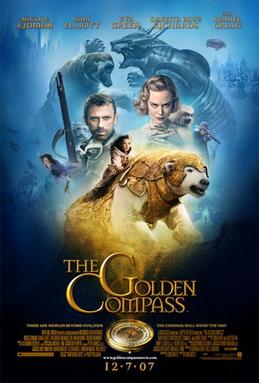
Golden Compass gets lost in cash


I really want to like Golden Compass. It is about a rebellious and courageous girl resisting an authoritarian and repressive regime. It has great CGI effects, including those spectacular polar bears. It has a Mark Twain character – the United States’ best known anti-imperialist, though this aspect of his career is mostly forgotten. And it features Nicole Kidman, of whom I am a big fan.
So, why do I dislike the film so much? Well, to start with there is something obscene about spending close on $200 million for a film in the first place. Not as obscene as spending $400+ billion on the military budget of the USA but it nonetheless speaks to the fact that Hollywood has its priorities ass backwards.
It is one more demonstration that the movie industry thinks that if it can throw a bucket of money large enough at a film then the audience will flock to the product. Sooner or later it is bound to blow up in their faces, if only because the potential audience isn’t big enough to cover the bill.
The hideously bad Beowulf is discovering the same thing and not even the almost exposed virtual nipples of Angelina Jolie can save that film.
What the filmmakers of Golden Compass – and Beowulf – failed to realize is that flash and pomp can only cover up so many story flaws. Eventually we are bound to notice that behind the swelling music and incredible visuals is an empty vessel.
The story of the film is potentially rich, and the book did well for a reason, I suspect. It is the story of a world in which a repressive regime, the Magisterium, wants to eliminate all critical thinking and opposition. To do this means nipping it in the bud while children are still young.
Strangely, the source of critical thought is somehow connected to space “dust”, which links together all the different, possible worlds in the many universes. This, I suppose, is meant to represent the different possibilities inherent in free will.
One manifestation of this dust, this free will, is in the souls of the people. In the world of The Golden Compass, unlike our own, people’s souls live outside of their body in the form of “demon” animals. And prior to adulthood, these demons are changeable and unfixed. But once they are adults, the space dust (free will) flows through their now fixed demons into the owners.
The Magisterium, with the usual obviously evil characters prone to the equivalent of mustache twirling and irrational violent outbursts, wants to eliminate free thought by separating children from their demons, sort of a demonectomy. They have set up a laboratory in the north pole where they perform experiments on kidnapped children, violently separating them from their demons.
Into this backdrop steps Lyra the orphaned niece of a controversial professor/explorer a la Indiana Jones, who is an expert in the cosmic dust. He sees the dust’s power to expose the lies of the government and set the people free. However, she discovers that the government wants to kill him. After warning him in time Lyra becomes entangled in a complicated plot driven, in part, by a desire to save her kidnapped friend from the laboratory and also by her desire to protect and help her uncle in his quest.
It this sounds like a mouthful of detail to try and cram into a 90 minute film, well you are right and the result is a massive amount of exposition by various characters to explain the world, the backstory, the plotline. For a film that spent so much on its production we spend a lot of time watching talking heads tell us the story.
This serious flaw is compounded by the fact that a key means of driving the story forward is the “golden compass” aka the “alethiometer”. This semi-mystical device, given to Lyra by the head of the university, is meant to tell those who know how to use it, the hidden truth.
Pretty much every key moment in the plot is resolved by Lyra falling into a sort of trance while staring at the golden compass, which then answers the problem or question at hand. It literally is the ghost in the machine – a force outside of the characters resolving the story on their behalf.
It is both sloppy and boring. After all, we’re there to see the story’s characters struggle using their own hard won skills and experience. If it’s done for them, well, what’s the point?
The filmmakers should have used some of the $180 million to pay for story editors.
I’m sure there are some who will agree that this is all true but be willing to excuse the film because, after all, “it is meant for children, isn’t it.”
But this is to disrespect children who, as the film itself explains, aren’t as silly as we might think. What’s more, we should be teaching our children using the best techniques of storytelling and technological flimflam doesn’t count.
If I may permit myself a final, more general comment, I’ve noticed in many of the politically inclined films of this year many of the same faults – a didactic tone, too much exposition, one dimensional characters, etc.
To be fair I think this is the result of a certain immaturity, a newness in attempting to tell socially engaged stories amongst a broader section of artists. They haven’t yet internalized politics in a way that it becomes organic to the story and not a club to beat the audience with. Redacted was an example of this. In spades.
This, I think, is a normal part of the politicization process. My only fear is that because film budgets are so high and Hollywood so terminally timid, that these failures of youth will be written off as failures of form. The political baby will be thrown out with the didactic bathwater.
I hope this isn’t the case. A bad Golden Compass, which valorizes both children and rebellion against unjust authority, is better than a (much) more entertaining Lord of The Rings, with its racist, War on Terror boosterism.

Sunday, July 22, 2007

Films For Peace

So, tonight was the third installment in the Peace Reel Film Festival, organized by Artists Against War in Christie Pits Park, here in Toronto. It's been a great event, nothing quite like watching movies under the stars (or the barely visible spots in the sky that pass for stars in the city). There's no doubt that the event was a great success by all accounts (except that most elusive of accounts - money. We're not allowed to charge, only ask for donations).
The first screening in the series was the Canadian premiere of an incredible film about the Israeli Occupation of Palestine, Occupation 101. Things looked dreary on the day, to be honest, with a major downpour and looming black clouds into the evening. Not the kind of thing which brings people out to an outdoor event. But still the people came - nearly 200 of of them, which is a sure sign of how important this issue is to people, and to the buzz around the film. AAW flew one of the filmmakers up from LA - Sufyan Omeish - to introduce the film and take questions. He was extremely articulate on the issues (not surprising since he and his brother spent 6 years making the film).
The next week the crowd wasn't as large but still respectable at 80 people for Kanehsatake: 270 years of resistance. This film is now more than 10 years old so the fact that it can still draw people speaks to its power and to the issue. It's about the Indigenous occupation of a planned construction site on indigenous land at Oka in Quebec. With the recent national day of action for land rights, this film still has lots of relevance. It was preceded by a short film called Mohawk Smokes - about how the Mohawk community at Tyendinaga, in Ontario, have been selling tobacco to raise money for a traditional longhouse and for community services. One of the directors, Audrey Huntley, along with Doreen Silversmith, an indigenous representative from Six Nations, spoke to the films and the issues within them.
Back to tonight... It was bigger than last week with over 100 showing up to see the screening of The Prisoner: or How I Planned to Kill Tony Blair - a film about a journalist in Iraq who was arrested by US troops and held for 9 months, including in the notorious Abu Ghraib. He was told that he was involved in a plot to kill British Prime Minister Tony Blair. If it weren't for the very real horror that Yunus, the subject of the film, and his brothers suffered it would be a comedy.
Anyway, there's just one more week to go in the Film Festival - which I believe to be Canada's only outdoor film festival. Next week will be the classic anti-colonial film, The Battle of Algiers. If you're in Toronto, you don't want to miss it. It's an incredible movie, so sharp on the issues and reality of foreign occupation that the Pentagon screened it for some of its officers as a lesson in what not to do. Apparently they weren't paying attention.
DreamHost Promotional Codes