 “The only thing that sustains one through life is the consciousness of the immense inferiority of everybody else, and this is a feeling that I have always cultivated.”
- Oscar Wilde
My wife and I have a little joke we tell each other regularly. When we catch ourselves complaining about other people – whether specific people or people in general (the blind, stupid masses). One or both of us will finish the kvetch with the statement “because we’re better than everybody else.” Asking around, it turns out that this feeling is one that most people have. Don’t bother to deny it, you know it’s true. If we don’t support it explicitly (at least whispered to our nearest and dearest our in our inner monologues) then we support the idea implicitly, through your support of all sorts of repressive institutions.
Why do we support funding for the police? Surely we don’t think WE need to be policed. WE’RE not law-breakers, murderers and the like. It’s those other people out there. Why do we think that we don’t need a union in our workplace? Well, because unions destroy productivity and innovation. How is it that unions do this? Well, they prevent our boss from promoting people with real talent and instead, with unions, the people who get promoted or who keep their job do so on the basis of seniority. And we know that this just means lazy people. Not us, of course – WE’RE not lazy. It’s those other people who ruin it for everyone else.
As Sartre noted “Hell is other people.” I’m alright, Jack. What’s your problem? And that feeling must be widespread because according to a 2006 study, Americans have fewer close friends and confidantes now than they did twenty years ago. Surely the same thing likely applies to Canadians who are culturally very close to Americans, at least in English Canada.
“Researchers also found that the number of people who said they had no one with whom to discuss such matters more than doubled, to nearly 25 percent. The survey found that both family and non-family confidants dropped, with the loss greatest in non-family connections.”
A significant part in this growing isolation is the fact that we are working more hours now than we were 20 years ago. But this creates a reinforcing effect where our sense of distance from our fellow humans grows the less contact we have with them. And the more we feel disconnected from our fellow humans, the less contact we are likely to have with them. Of course, those with lower incomes and education levels are affected the most.
This dynamic is, of course, encouraged by our mass media, which specifically, regularly, and repeatedly undermines social empathy. We are treated to Cops, America’s Most Wanted, Crime Stoppers, and other “true crime” shows and segments that encourage us to fear our neighbours and, even better, to rat them out whenever possible. We have talk show hosts encouraging us to mock our neighbours’ troubles and worship celebrities. Radio has brought us “shock jocks” who are, let’s face it, just plain assholes and who make us laugh by being prick
 s to other people – because those people are never us. Reality shows teach us to envy, despise, laugh at, fear the people who are humiliating and abusing each other for the right to be the top banana and win the million dollars, or million dollar husband (who maybe turns out to be a murderer).
That these things exist and that we generate a significant sense of ourselves in opposition to the rest of the human race as a result of such cultural productions is horrifying. But these are all symptoms of a deeper social disease with which we are all infected.
To some, our sense of superiority over the rest of the species is proof that humanity is doomed with some original sin that cannot be overcome – greed, lust, covetousness. But this is to beg the question and to start with symptoms, while ascribing to them prime causes.
Marx makes note of this in his discussion of political economy in the 1844 Manuscripts. He has a lot of insightful things to say that still ring true. For Marx, he starts not from this or that value but from the fact of our basic material needs and how we satisfy them. He starts from nature and humans (who are a part of nature). What makes us human is that we act upon nature, transform it, mold it to meet our needs – food, clothing, housing, etc. He calls this conscious act of labour, to tranform the world to meet our needs, that thing which makes us human; it is our species-being.
But, Marx goes on, if that is what makes us human, what does it mean that we live in a world where we don’t control our labour, where we don’t produce freely according to our needs but instead according to the plan and desires of our employer.
“…he, therefore, does not confirm himself in his work, but denies himself, feels miserable and not happy, does not develop free mental and physical energy, but mortifies his flesh and ruins his mind. Hence, the worker feels himself only when he is not working; when he is working, he does not feel himself. He is at home when he is not working, and not at home when he is working. His labour is, therefore, not voluntary but forced, it is forced labour. It is, therefore, not the satisfaction of a need but a mere means to satisfy needs outside itself. Its alien character is clearly demonstrated by the fact that as soon as no physical or other compulsion exists, it is shunned like the plague…”He then continues with this very pithy and, frankly, visionary description of the roots of consumerism:
“The result is that man (the worker) feels that he is acting freely only in his animal functions – eating, drinking, and procreating, or at most in his dwelling and adornment – while in his human functions, he is nothing more than animal.
“It is true that eating, drinking, and procreating, etc., are also genuine human functions. However, when abstracted from other aspects of human activity, and turned into final and exclusive ends, they are animal.”
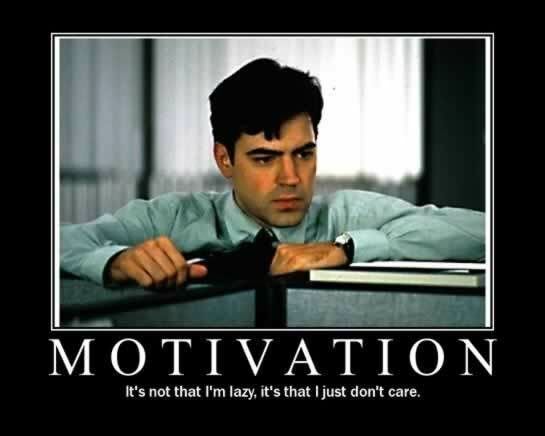 But, back to the point of this whole discussion, which was why we feel superior to our neighbours. According to Marx, if we are alienated from that thing which makes us human, then we are alienated from ourselves, our nature. If we are alienated from our selves then we are also alienated from our fellow humans, for the same reason.
Capitalism creates a situation where all confront all as alien, hostile beings. And this, of course, isn’t simply some abstract mental state, it has a real concrete manifestation through generalized competition. We fight over jobs. We fight to retain control of as many of our scarce financial resources as possible. The carpenter who we hire to fix our house faces us as a man who wants to get the most out of us that he can. We, on the other hand, want to pay the lowest possible price; we want to get the most out of him. And this general dynamic applies whether it is craftsman/businessman vs client or customer vs massive corporation. And, of course, it is so when, as workers, we confront our boss. The same dynamic prevails.
This historically specific – not natural – state of conflict and competition for (artificially) scarce resources becomes generalized throughout society as a state of perpetual antagonism. We feel like someone is always trying to rip us off (and they quite likely are, that’s the nature of scarcity). It causes us to feel not only defensive but also morally superior.
This is one of the key reasons why, for Marx, superceding capitalism is not something that can be announced or dictated from above. Workers, to overthrow capitalism or win a strike even, have to band together. They have to fuse their interest and recognize a common aim. In doing so they begin to overcome that dynamic that puts us at odds with one another. We must fight racism, sexism and homophobia, which increase competition between workers and leave all in a weaker, material, political and moral state. This growing class unity increasingly divides society into those camps that represent the fundamental division – humanity from their species-being, from control of their creative labour. The fact, as the study above demonstrated, that we have less friends now than 20 years ago, and probably feel less connected to our fellow humans, is a measure of how successful neo-liberalism has been in North America in ratcheting up competition between workers. We are working harder for less.
Knowing all this won’t in itself stop us from feeling superior. It’s a material-social problem that can only be solved with a material-social solution. But knowing it will provide us with one more reason to feel superior to all the ignoramuses who are laughing at their fellow workers being humiliated on TV talk shows.


