Religion is the origin of all social thought – philosophy, science, law, ethics, etc. Like the social thought that we now consider secular, it is also imbued with a referent principle that provides a foundational justification for its imperatives and truth claims. For religion the foundational principle is the will of God, for liberal society it is natural law, for Marxism it is human species-being, which is the ability to perform creative labour (thus transforming self and world). My argument is that it is not necessarily the case that the first and the last are in contradiction. Or, rather, accepting certain conceptions of the “will of God” doesn’t preclude a philosophical framework in which one relies upon the notion of species-being for the foundation of human action. Certain understandings of Islam, for instance, conceive of God as the sum of everything in the universe [http://en.wikipedia.org/wiki/Islam_and_science]. To engage in scientific research is another road to seek an understanding of God’s will through understanding the natural laws, which are partial expressions of God Himself. Similarly, one can argue that God, understood as described above, created humans with a certain species-being and to struggle for that species-being to be liberated from alienation and exploitation is a righteous struggle to bring humans into harmony with their God-given nature. That is, religion is not necessarily a barrier to rational examination of nature and society. It can, in fact, provide an impetus.
The key determination of religion’s role is political and historical. Going back to my previous discussion of Kautsky and his examination of the rise of Christianity in the context of the growing Jewish revolt against Rome in the 1st Century CE, he notes that the messiah must be understood not as someone who will lead people to righteousness through cleansing them of sin by his own death. Rather, the messiah is a warrior prince who will lead the Jewish people, under the yoke of both the Romans and a compliant and corrupt local ruling class, in a revolutionary war to win their freedom. The messiah is understood as much in practical as spiritual terms. When Josephus, the first century eyewitness, and chronicler of the Jewish revolt discusses the various self-declared messiahs leading tens of thousands into the desert or to the banks of the River Jordan – usually to be slaughtered by the Roman army – these have to be viewed not as we would contemporary religious cults. These were religiously inspired political revolts that were crushed but reappeared again and again, though the insurmountable character of Roman power shifted the presumed character of the messiah increasingly in the direction of the supernatural. The Jewish and (likely) Christian urge to insurgency as a core religious principle probably wasn’t broken until the second Jewish revolt, or Bar Kokhba Revolt, that took place some 60 years after the first Jewish war against Rome in 66-72AD. It took two profound defeats, with tens of thousands captured into slavery, tens of thousands slain, the local political and religious leadership shattered and sent into exile and the Jewish capital destroyed in order to bleed Judaism (and the minor Jewish sect of Christianity) of its rebelliousness, at least in the ancient world. In this sense, the rise of the Catholic Church has to be understood in a sense similar to Stalinism – it is the product of a world historic defeat of Christianity, not its victorious triumph. Nonetheless, this is a profound demonstration of the ways in which belief systems, including codified dogma, are subject to the fire of historical experience and molecular transformations over long stretches of time.
Now, before I am handed the long list of crimes by organized religion throughout history and around the world, let me just say that these, while true, don’t negate my point. Certainly all forms of idealistic dogma, infected by pessimism turned into principle, or by ruling class ideas given eternal justification through imputing them to be the wishes of God (or Fuhrer or Great Helmsman, whatever) can act as an obstacle to revolution or even to justify horrors from the Inquisition to the Holocaust. This applies to Marxist ideas and Marxist thinkers as much as it does to religion, witness the earnest defenses and denials of Stalin’s genocidal policies during the Great Purges by well-meaning, self-identified Marxists. Of course we try to test our principles against reality but let’s be honest, at least amongst ourselves, shall we. It is the rare Marxist who honestly and regularly engages in the kind of “ruthless criticism of everything that exists” urged by Karl himself towards one’s own principles – whether that be the “socialist character” of the former USSR or China or Cuba or the validity of Trotsky’s transitional program or the continued relevance of a strategic focus on the working class. Not to disparage any particular position on any of these things but just to point out that we operate on faith based upon past insights or, indeed, prejudices more often than we care to admit. The fact that they are coded into a rational discourse doesn’t change one iota the faith-based character of many of our present positions. The doctrine of the Third Period, in which the Stalinized Communist Parties around the world went on a rampage against everyone else on the left during the late 1920s, was given a perfectly rational form of argument to justify utter madness. At a more mundane level, it is simply not possible or desirable to constantly critique and review all aspects of the canon. At a certain point the past argument decay like radioactive half-life leaving behind an act of faith to justify positions – particularly when the level of struggle is low for an extended period of time. That is why not only religious ideas have provided justification for terrible crimes and for resisting social change – so too have liberal ideas and, more recently, Marxist ideas. The traditional Trotskyist escape route, to point to the pressure of material circumstances leading to the degeneration of the Bolshevik Revolution apply with equal justification to religion. As noted above, Catholicism was the product of the defeat and decay of revolutionary Christianity.
Karl Kautsky, expelled from the Marxist canon for so long because of his renegacy, is a prime example of the transformation of a revolutionary into his opposite. We apply labels for such phenomenon that have descriptive power and provide a convenient shorthand – renegade, centrist, reformist, etc. But those labels also freeze in aspic a process that is ongoing and dynamic. It allows us to forget that our own ideas remain in process, probably until we fly up to heaven on gossamer wings. This is a problem for two reasons. The most obvious is that it blunts our own critical faculties. The self-righteous mind is an uncritical mind. But it also means that we lose the good in the teachings of those who later “betray the faith”. We have forgotten the power of Kautsky’s analysis. Years ago I read The Algebra of Revolution, a book on the Marxist dialectic, by John Rees. It still informs my approach to dialectics and for that I’m grateful. Yet it contains a critique of Kautsky as having rejected dialectics and that this is at the root of his inability to see and understand the bureaucratization of the German SDP – thus explaining his becoming a renegade and counter-revolutionary. I accepted this on faith and even repeated it now and again, though Kautsky has been so thoroughly expunged that he rarely comes up. But then I read the Foundations of Christianity and what did I find – not only a sophisticated use of dialectical materialism to analyze historical events, but also a beautiful use of the idea of combined and uneven development (always ascribed to Trotsky in my Marxist education). There’s also an analysis of the rise of bureaucracy in the workers movement that is thrown into the book in such a casual way that it is obvious it had been discussed elsewhere. In fact, Kautsky’s analysis is much better than Lenin’s analysis of the labour bureaucracy laid out in “Imperialism: the highest stage of capitalism.” All these years I thought that Tony Cliff and the IS Tradition had pioneered a sophisticated materialist analysis of the labour bureaucracy that superceded Lenin’s “crude materialism” and here I read it in a book about Christianity by a renegade published in 1908. And yet, notwithstanding Kautsky’s sophisticated and supple Marxism he was, indeed, a renegade against his own principles. Rather than intoning his crimes it ought to give us pause to reflect on the frailty of all movements and systems of thought, especially those of individuals, which seek to remake the world. And it ought to remind us that, insofar as history gives a damn at all about us, it will judge our shortcomings harshly as well.
The point of this journey through the crimes and misdemeanors of history is that we must not mistake the degeneration of movements, doctrines and modes of thought with those things themselves. All these things evolve historically and must be studied in their specificity, including particular expressions of Marxism and Marxist movements.
Nonetheless, most Marxists would argue that while religion might be flexible, and might play role in the struggle for social liberation, as it has repeatedly in history, it is nonetheless a product of class society, which will wither with the victory of socialism. Even were that true would it make religion any different than Marxism, which is first and foremost a theory of social combat? In this sense it too will have been rendered irrelevant once class struggle ceases to be the motor of history. I agree that such an event, to be hoped for, would absolutely transform important aspects of religion and cause a rethinking of many key elements of both religious dogma and ritual, along with shattering reactionary religious institutions, like the Catholic hierarchy – as it will transform every field of human activity: sex, the family, work, medicine, sports, et al. At the same time, I want to argue that religion will absolutely not cease to exist as a community of belief united by a series of principles derived from an awe of the incomprehensible vastness of the universe and the puny finiteness of human life. And this is an important point that Marxists forget. Religion’s first point of origin is not class society, though it is sullied by it along with everything else. The religious impulse derives from the mysteries of the universe. By and large we no longer believe that Gods inhabit trees and rocks or are the cause of lightning. We no longer expect the kind of miracles we see in the New and Old Testament, of turning water into wine or parting seas – partly because most of the miracles have been surpassed by technology and now seem rather pedestrian and amateurish. But the universe is still largely a mystery and probably will be for centuries or longer. In the contradiction that exists between our ability to grasp this vastness, Freud described it in Civilization and its Discontents as an oceanic feeling, and our experience of the infinitesimally smaller thing that is a human life – or even human society – is the space in which religion becomes possible. As long as people die and we haven’t ourselves ascended to godhead we will seek to find ways to grapple with that gap emotionally, ethically and morally. The hardened Marxist will of course scoff: “we will conquer the mysteries with the power of science liberated from class society.” But this misses (at least) a couple of things. Intellectual and abstract understanding cannot satisfy all of our emotional needs. Understanding the laws of the conservation of matter and energy isn’t much use at the funeral of a loved one. Knowing the role of genetics, epigenetics, proteomics, nutrition and human biology doesn’t stop a parent’s heart from filling with emotion and awe at the birth of a child. It feels like a miracle because it is a miracle that such a thing should happen in the whole of the universe and arise from apparently nothing. Stripped of the distortions of class society and the reflections of class struggle, religion will nonetheless continue in some form to provide an outlet for the still natural condition of mortality and finiteness in an infinite universe. Of course the exact form it will take is as impossible to understand as the dynamic and multitudinous ways in which a post-capitalist society will be organized democratically from the bottom. To attempt to describe the precise character of it is as silly as attempts to describe the precise ways that economy and culture will be organized under socialism precisely because these will the product of mass participation and experimentation over an extended period of time. All any proponents of radical transformation can do in the here and now is to struggle to create the conditions to unleash human creativity. The reason why we need to show respect for religion, to include expressions of it in the pantheon of potentially powerful ideologies of social change, is to increase the likelihood that humanity will achieve the liberation to ignore our dreams and to create their own. Opening the gates of Marxism to include those who accept the basic premises – self-emancipation, materialist conception of history – in a world where religion continues to dominate, is an important strategic consideration.**
** I should say that I’m an “atheist”, have been since before I was a Marxist, and have never even been baptized. This is a strategic and epistemological argument for a certain kind of philosophical pluralism within a strategic, materialist unity. A Muslim who fights for the unity of the working class and for permanent revolution is more valuable to me than an atheist Stalinist who seeks alignment with bourgeois “progressives”.
Showing posts with label Karl Marx. Show all posts
Showing posts with label Karl Marx. Show all posts
Tuesday, April 16, 2013


Thursday, April 11, 2013
Marxism & Religion: Part 2 - From Hatred to Brotherhood
Marxism is a child of the Enlightenment. It was born of the revolutions in politics, philosophy and economy that shook Europe and America from the 17th Century through to the 19th Century. As such it was tempered in part in the polemics and struggles against religious authority. After all, religion was the ideology of the European ruling classes, used to justify the right of kings and popes to do as they pleased at the expense of the people. To be against religious authority was to be against the feudal order. It was to be in favour of equal rights and natural law, as opposed to the rights and privileges of estates.
But Marxism was also a break with the Enlightenment. It developed after the retreat of the great French Revolution, long after the ossification of the English Revolution and the disappointment and slavery that issued from the American Revolution. The experience of revolt and disappointment deepened the critique of Marx and Engels. This was particularly true after their very direct experience of the German revolution in 1848, which was defeated by the treachery of the bourgeoisie, the class that had led the Enlightenment and the revolutions of the previous century. But even before Marx raised the call for permanent revolution to sweep away the bourgeoisie as well as the old feudal order, he and Engels had reached an understanding that the phenomenon of religious ideas and religious practices has to be understood as an expression of the experience of contemporary humans:
It was no longer the case that religion was a trick pulled on the masses by the ruling classes. Certainly the ruling class used religion for its own purposes but even if it hadn’t, the conditions of oppression would have generated it so long as the oppressed masses didn’t have the confidence themselves to resist their conditions. It was, in that sense, a painkiller – an opiate – that made oppression easier to bear. Though at this point Marx still holds that criticism of religion frees the mind of man so that he is free to resist real oppression, by the time of the Theses on Feuerbach in 1845, two years later, he argues that to get rid of religious ideas one must annihilate the social practices from which they emanate (“Thus, for instance, once the earthly family is discovered to be the secret of the holy family, the former must itself be annihilated theoretically and practically”). Thus, I think that if we’re going to analyze religion we ought to at least start from the level that Marx began at way back in 1843 and not revert to the position of the Young Hegelians.
This marks a big step forward, I would argue, and begins to bring materialism back into the critique of religion. But, of course, Marx isn’t the final word on Marxism in general nor on the question of religion in particular. It’s interesting that in Engels and later, Kautsky, we seem some important evolution of the idea. Kautsky, for instance, quotes Engels as saying:
Kautsky agrees overall with Engels parallel but notes that there are a few limitations to Engels views: “Christianity can hardly be called a religion of the slaves; it did nothing for them. On the other hand, the liberation from misery proclaimed by Christianity was at first quite material, to be realized on this earth, not in Heaven.” What is interesting is that Kautsky traces the “collapse” of primitive Christianity into an idealistic religion of servitude and bureaucracy to many of the same kind of material pressures that transform the workers’ movement. He does not, first and foremost, fetishize the details of early Christian ideology. It is the pressure of material conditions that corrupts the Christians.
The conclusion we ought to draw from this is that rather than dismissing religion as a phenomenon incompatible with an ideology of revolution, in general, and of Marxism, in particular, we must examine it in its concrete specificity. We also ought to have a certain amount of humility as Marxists as religiously inspired people have been resisting oppression through revolutionary struggle a lot longer than have we, though I suppose that it is in the nature of all youth to disrespect their elders.
PART 3: Would there be religion under socialism?
But Marxism was also a break with the Enlightenment. It developed after the retreat of the great French Revolution, long after the ossification of the English Revolution and the disappointment and slavery that issued from the American Revolution. The experience of revolt and disappointment deepened the critique of Marx and Engels. This was particularly true after their very direct experience of the German revolution in 1848, which was defeated by the treachery of the bourgeoisie, the class that had led the Enlightenment and the revolutions of the previous century. But even before Marx raised the call for permanent revolution to sweep away the bourgeoisie as well as the old feudal order, he and Engels had reached an understanding that the phenomenon of religious ideas and religious practices has to be understood as an expression of the experience of contemporary humans:
“Religious suffering is, at one and the same time, the expression of real suffering and a protest against real suffering. Religion is the sigh of the oppressed creature, the heart of a heartless world, and the soul of soulless conditions. It is the opium of the people.
The abolition of religion as the illusory happiness of the people is the demand for their real happiness. To call on them to give up their illusions about their condition is to call on them to give up a condition that requires illusions. The criticism of religion is, therefore, in embryo, the criticism of that vale of tears of which religion is the halo.
Criticism has plucked the imaginary flowers on the chain not in order that man shall continue to bear that chain without fantasy or consolation, but so that he shall throw off the chain and pluck the living flower. The criticism of religion disillusions man, so that he will think, act, and fashion his reality like a man who has discarded his illusions and regained his senses, so that he will move around himself as his own true Sun. Religion is only the illusory Sun which revolves around man as long as he does not revolve around himself.”
It was no longer the case that religion was a trick pulled on the masses by the ruling classes. Certainly the ruling class used religion for its own purposes but even if it hadn’t, the conditions of oppression would have generated it so long as the oppressed masses didn’t have the confidence themselves to resist their conditions. It was, in that sense, a painkiller – an opiate – that made oppression easier to bear. Though at this point Marx still holds that criticism of religion frees the mind of man so that he is free to resist real oppression, by the time of the Theses on Feuerbach in 1845, two years later, he argues that to get rid of religious ideas one must annihilate the social practices from which they emanate (“Thus, for instance, once the earthly family is discovered to be the secret of the holy family, the former must itself be annihilated theoretically and practically”). Thus, I think that if we’re going to analyze religion we ought to at least start from the level that Marx began at way back in 1843 and not revert to the position of the Young Hegelians.
This marks a big step forward, I would argue, and begins to bring materialism back into the critique of religion. But, of course, Marx isn’t the final word on Marxism in general nor on the question of religion in particular. It’s interesting that in Engels and later, Kautsky, we seem some important evolution of the idea. Kautsky, for instance, quotes Engels as saying:
“The history of primitive Christianity presents remarkable coincidences with the modern workers’ movement. Like the latter, Christianity was originally a movement of the oppressed; it first appeared as a religion of slaves and freedmen, of the poor, the outcasts, of the peoples subjected or dispersed by Rome. Both Christianity and Socialism preach an approaching redemption from servitude and misery; Christianity assigns this redemption to a future life in Heaven after death; Socialism would attain it in this world by a transformation of society…”
Kautsky agrees overall with Engels parallel but notes that there are a few limitations to Engels views: “Christianity can hardly be called a religion of the slaves; it did nothing for them. On the other hand, the liberation from misery proclaimed by Christianity was at first quite material, to be realized on this earth, not in Heaven.” What is interesting is that Kautsky traces the “collapse” of primitive Christianity into an idealistic religion of servitude and bureaucracy to many of the same kind of material pressures that transform the workers’ movement. He does not, first and foremost, fetishize the details of early Christian ideology. It is the pressure of material conditions that corrupts the Christians.
“Like Christianity, this movement is obliged to create permanent organs in the course of its growth, a sort of professional bureaucracy in the party, as well as in the unions, without which it cannot function, which are a necessity for it, which must continue to grow, and obtain more and more important duties. “This bureaucracy – which must be taken in the broad sense… - will not this bureaucracy in the course of things become a new aristocracy, like the clergy headed by the bishop? Will it not become an aristocracy dominating and exploiting the working masses and finally attaining the power to deal with the state authorities on equal terms, thus being tempted not to overthrow them but join them?”
The conclusion we ought to draw from this is that rather than dismissing religion as a phenomenon incompatible with an ideology of revolution, in general, and of Marxism, in particular, we must examine it in its concrete specificity. We also ought to have a certain amount of humility as Marxists as religiously inspired people have been resisting oppression through revolutionary struggle a lot longer than have we, though I suppose that it is in the nature of all youth to disrespect their elders.
PART 3: Would there be religion under socialism?
Friday, August 19, 2011
"Karl Marx, it seems, was partly right..."
Well, there's something you only ever hear from economists when they're pooping their pants because the system is going in to meltdown. We heard it in the early 1990s and again when the financial crisis hit in 2008. And now Nouriel, who resists the delusional boosterism of pro-capitalist economics more than most, has reminded us that the "Old Moor" had a few things to say about capitalist crises and their inevitability. Of course, Roubini can't accept that Marx's conclusions were correct - "his view that socialism would be better has proven wrong" - so all that we're left with is TINA - there is no alternative. So, suck it up all you workers out there who are getting laid off and facing cuts to services and benefits.
But if Marx doesn't offer a solution - rational planning based on human need as determined by democratic control of the economy, rather than the control of unelected oligarchs and corrupt and decadent bond traders - then neither does Roubini. Within the same article he contradicts himself when prescribing a solution. First he writes:
Until last year, policymakers could always produce a new rabbit from their hat to reflate asset prices and trigger economic recovery. Fiscal stimulus, near-zero interest rates, two rounds of “quantitative easing,” ring-fencing of bad debt, and trillions of dollars in bailouts and liquidity provision for banks and financial institutions: officials tried them all. Now they have run out of rabbits.
Then, after telling us that governments have no options left for staving off the growing crisis in both the financial and real economy (and demonstrating this claim with figures and examples), he offers us a solution.
The right balance today requires creating jobs partly through additional fiscal stimulus aimed at productive infrastructure investment. It also requires more progressive taxation; more short-term fiscal stimulus with medium- and long-term fiscal discipline; lender-of-last-resort support by monetary authorities to prevent ruinous runs on banks; reduction of the debt burden for insolvent households and other distressed economic agents; and stricter supervision and regulation of a financial system run amok; breaking up too-big-to-fail banks and oligopolistic trusts.Uh, wait a second Nouriel - didn't you just go to great lengths to demonstrate that precisely these kinds of measures, other than make taxation more progressive, were no longer possible given the financial state of many western governments. Europe is on the edge of a meltdown precipice. America's debt has been downgraded. Which is it?
Thursday, August 4, 2011
Libertarianism Is Not Paleo
 |
| What does supporting wars against people in far off countries have to do with being paleo? |
Then, at the beginning of this year, a family friend suggested we read the Paleo Solution by Robb Wolf. An awesome book overall, it was a bit like completing the circle. My wife and I went on a Paleo Challenge - basically a thirty day cleanse with no booze, sugar, fruit, dairy, grains, starches, etc. The purpose is to break your addiction to common food items in our diet that make you sick - like wheat (my wife has a dairy allergy). The last of my digestive issues faded away with my elimination of dairy, along with another 10 pounds, bringing me back to what I weighed in my 20s. My wife had been allergic to almonds and some other nuts - there are a lot of serious food allergies in her family - but after the cleanse she can now eat almonds. The red splotches I would get on my neck and that my daughter was getting on her face: gone.
I'm rehearsing all this to say that I'm a convert to Paleo. But what the hell is with the right wing libertarian freaky shit amongst so many of Paleo's leading advocates? Rob Wolff, Dr. Michael Eades, Art DeVany, all these guys - whose writings on diet I reference and whose work in this regard is important - are all about the free market/no big government scene. It's like some kind of LSD logic trip where they've concluded that since there was no big government in Paleo times, prior to agriculture, we shouldn't have any government now. During the battles in Wisconsin this spring - when the Tea Party governor moved to effectively outlaw the democratic right to union organization and collective bargaining, Dr. Eades tweeted his support, as though driving down the standard of living of working people doesn't contribute to the kind of high carb, low quality diet that he opposes.

I'm no fan of the capitalist state and "big government" per se. But that's not the same as opposing social programs like socialized healthcare or regulatory agencies, won as concessions from particular sectors of the economy like the pharmaceutical industry, to stop snake oil salesmen from poisoning us (well, the agencies are corrupt and ineffective but better than "industry regulation"). But being a libertarian, from the point of view of being critical of the dominant dietary patterns of North Americans, is an incoherent response that leads to a form of conspiracy theory - people eat badly because the government has tricked them into doing so. It fails to explain why the diet has changed in a convincing manner and often ends up blaming the victim.

I'm no fan of the capitalist state and "big government" per se. But that's not the same as opposing social programs like socialized healthcare or regulatory agencies, won as concessions from particular sectors of the economy like the pharmaceutical industry, to stop snake oil salesmen from poisoning us (well, the agencies are corrupt and ineffective but better than "industry regulation"). But being a libertarian, from the point of view of being critical of the dominant dietary patterns of North Americans, is an incoherent response that leads to a form of conspiracy theory - people eat badly because the government has tricked them into doing so. It fails to explain why the diet has changed in a convincing manner and often ends up blaming the victim.
First off, newsflash, it's true that there was no "government" during the paleolithic era. There was also no capitalist economy, no money, little trade and what trade there was would have been barter between tribal groupings who happened to encounter one another on their nomadic journeyings. A capitalist economy - that is to say, production for the purpose of exchange with the goal of accumulating profit - is a very recent phenomenon, much more recent than the agricultural revolution of fifteen thousand or so years ago. And if wheat and grains were an unhealthy addition to the human diet capitalism was even worse for humans.
Now, I believe in being nuanced about these things and Marx is my great mentor in this. Agriculture and its side effects did untold damage to the human diet and, ultimately, to the environment. But without the development of agriculture human society could not have advanced technologically, politically, or culturally beyond the level of small-scale primitive hunger-gatherer communities. Now, don't get me wrong, there are certain features of hunter-gatherer communities that recommend them: there was no private property and all things were shared within the community; while there was a gender division of labour women tended to be full participants in the life - and decision-making - of the community; there were strong communal ties that gave everyone a sense of purpose and belonging that is utterly foreign to us. On the other hand, life was hard and it was short. Break an arm or cut yourself and you had a good chance of getting an infection and dying. Get a bit slow in your old age and you had a good chance of ending up as lunch for another predator. I'm glad that our ancestors discovered farming, even if it wasn't the healthiest way to eat - it was a necessary compromise for the advancement of civilization.
Capitalism is a bit like that. Check out this quote from Marx in the Communist Manifesto:
The bourgeoisie cannot exist without constantly revolutionising the instruments of production, and thereby the relations of production, and with them the whole relations of society. Conservation of the old modes of production in unaltered form, was, on the contrary, the first condition of existence for all earlier industrial classes. Constant revolutionising of production, uninterrupted disturbance of all social conditions, everlasting uncertainty and agitation distinguish the bourgeois epoch from all earlier ones. All fixed, fast-frozen relations, with their train of ancient and venerable prejudices and opinions, are swept away, all new-formed ones become antiquated before they can ossify. All that is solid melts into air, all that is holy is profaned, and man is at last compelled to face with sober senses his real conditions of life, and his relations with his kind....
The bourgeoisie has through its exploitation of the world market given a cosmopolitan character to production and consumption in every country. To the great chagrin of Reactionists, it has drawn from under the feet of industry the national ground on which it stood. All old-established national industries have been destroyed or are daily being destroyed. They are dislodged by new industries, whose introduction becomes a life and death question for all civilised nations, by industries that no longer work up indigenous raw material, but raw material drawn from the remotest zones; industries whose products are consumed, not only at home, but in every quarter of the globe. In place of the old wants, satisfied by the production of the country, we find new wants, requiring for their satisfaction the products of distant lands and climes. In place of the old local and national seclusion and self-sufficiency, we have intercourse in every direction, universal inter-dependence of nations. And as in material, so also in intellectual production. The intellectual creations of individual nations become common property. National one-sidedness and narrow-mindedness become more and more impossible, and from the numerous national and local literatures, there arises a world literature.
Capitalism, like agriculture, drove forward the advancement of technology and of human society, connecting us to each other and making us interdependent in a way that was unfathomable prior to its existence. But the cost was enormous - the vast destruction of the environment, the deaths of hundreds of millions in sweatshops, in wars of imperial conquest between competing great powers. As with our view of the introduction of agriculture we need to sustain this two-sided view. And, like the sins of agriculture, the sins of capitalism are not only no longer necessary for the advancement of humanity, they are an obstacle to the continued development of humanity. Oh, of course there continue to be technological advancements in both food and the broader technology, but the use of profit to mediate development - as the measure of success - acts as a barrier to development and distorts the development that exists. To give but a simple example, consider the humble QWERTY keyboard. It is ubiquitous, particularly with the rise of PCs, smartphones and tablets. But the QWERTY keyboard is not the most efficient way to organize a keyboard. In fact at the time that QWERTY was developed there were competitors that were more efficient but the inventors of QWERTY had the investors behind them that allowed them to promote their version so that it became dominant. And then the need for standardization did the rest. In other words, not through any conspiracy but merely through the working out of the logic of capitalist competition - based upon power and money, not upon quality or effectiveness as some people still believe, even after the financial meltdown - the least effective version of a technology has become dominant.
 |
| The net result of unregulated capitalism: massive public debt |
That's just a small example: extend that over an entire economy. The US is one of the few - perhaps the only - advanced industrial country that doesn't have a system of government run universal healthcare. It has the most expensive healthcare system in the world - with layers and layers of parasitic middlemen and bureaucrats (yep, "free enterprise" produces bureaucrats) - and up to a fifth of the population has no health insurance at all. Think about the road building program promoted by Eisenhower at the end of World War Two as a way to absorb the slack in the economy that arose as a result of the end of the war boom. They built something like 46,000 miles of roads at a cost of $426 billion. Was that the only choice? They could have built railways and other forms of mass transit. But the auto industry was a dominant component of the American economy - "what's good for General Motors is good for America" as they used to say - and so creating the infrastructure to promote the advancement of the most wasteful form of human transport became the priority. From there the logic took us to the development of subdivisions, instead of higher density urban developments. Subdivisions created more dependence upon cars, it made people more sedentary because they had to drive everywhere, it made us dependent upon fossil fuels that are contributing to climate change, it was the most inefficient way to build housing and it isolated us from each other behind high backyard fences, creating all the symptoms of alienation and isolation with which we are familiar.
A libertarian might say "ah-ha, but there's the rub: the American government facilitated and paid for the building of the road system that led to these terrible things." That's true but if the US government hadn't put those returning GIs to work and hadn't stimulated the economy, the period following World War Two - like that following the previous war - would have led to widespread revolutions. As it was there were labour upsurges bigger than during the Depression. In Europe the Communists were massively popular in Italy, France and had taken power in Greece (until the British crushed the Communist partisans who'd fought the Nazis and put a dictatorship into power). In America the Communist Party had close to 100,000 members. American capitalism needed the American government to save it from the American people - and the people of Europe and the world (remember there were anti-colonial revolts and revolutions in India, China, and Africa in the wake of the war).
What's more, it's not just the people who need to be policed - capitalism itself needs to be policed so that one section of the system doesn't behave in ways that put the whole system at risk. This should be obvious to everyone at this point after the debacle of the financial crisis in 2008. Under the direction of Alan Greenspan at the head of the Federal Reserve Bank and reinforced by such "economists" as Lawrence Summers and Tim Geithner, the financial system was de-regulated and stimulated with low interest rates. With wholesale wild west libertarianism, what did the banking sector do? It created "collateralized debt obligations" and pooled mortgages and other forms of opaque "financial products" that were, in fact, total junk. It rewarded itself for being so clever, providing massive bonuses even as the flames were licking at the door, and then refused all responsibility when the whole thing went up in flames. The American government, having allowed this to happen then stepped in to save the global financial system from collapse - to the tune of trillions of dollars - doubling the US national debt almost overnight. The banks got bailed out, the working class got the bill. How do you like your libertarianism so far?
These are just a few examples: I've looked previously at how the aging and decline of the North American economy has led to an attack on worker's living standards - including their diet. The present obesity epidemic has to be seen as the natural outgrowth of this decline as food corporations seek to boost profits by using fillers like cellulose (yes, wood) in our foods and workers - with less time and money - turn to cheaper, more convenient processed foods that provide energy in the form of low quality carbs that contribute to obesity and diabetes. This isn't a government conspiracy friends - this is capitalism doing what it was meant to do: increasing profits by whatever means necessary, including smashing unions, cutting wages, and diluting product quality. The simple truth is that if advocates of a Paleo lifestyle want the advantages of eating a primal diet to be available to the majority of the population and not simply the rich then you have to oppose the market - and the government - which together have created the present health crisis through a combination of elements - economic crisis, policy, profit motive, etc. Libertarianism is no Paleo Solution - it's a thoroughly modern, in the worst sense of the word, prescription to make things worse.
These are just a few examples: I've looked previously at how the aging and decline of the North American economy has led to an attack on worker's living standards - including their diet. The present obesity epidemic has to be seen as the natural outgrowth of this decline as food corporations seek to boost profits by using fillers like cellulose (yes, wood) in our foods and workers - with less time and money - turn to cheaper, more convenient processed foods that provide energy in the form of low quality carbs that contribute to obesity and diabetes. This isn't a government conspiracy friends - this is capitalism doing what it was meant to do: increasing profits by whatever means necessary, including smashing unions, cutting wages, and diluting product quality. The simple truth is that if advocates of a Paleo lifestyle want the advantages of eating a primal diet to be available to the majority of the population and not simply the rich then you have to oppose the market - and the government - which together have created the present health crisis through a combination of elements - economic crisis, policy, profit motive, etc. Libertarianism is no Paleo Solution - it's a thoroughly modern, in the worst sense of the word, prescription to make things worse.
Saturday, August 29, 2009
Ever Wonder Why You’re Better Than Everyone Else?
 “The only thing that sustains one through life is the consciousness of the immense inferiority of everybody else, and this is a feeling that I have always cultivated.”
- Oscar Wilde
My wife and I have a little joke we tell each other regularly. When we catch ourselves complaining about other people – whether specific people or people in general (the blind, stupid masses). One or both of us will finish the kvetch with the statement “because we’re better than everybody else.” Asking around, it turns out that this feeling is one that most people have. Don’t bother to deny it, you know it’s true. If we don’t support it explicitly (at least whispered to our nearest and dearest our in our inner monologues) then we support the idea implicitly, through your support of all sorts of repressive institutions.
Why do we support funding for the police? Surely we don’t think WE need to be policed. WE’RE not law-breakers, murderers and the like. It’s those other people out there. Why do we think that we don’t need a union in our workplace? Well, because unions destroy productivity and innovation. How is it that unions do this? Well, they prevent our boss from promoting people with real talent and instead, with unions, the people who get promoted or who keep their job do so on the basis of seniority. And we know that this just means lazy people. Not us, of course – WE’RE not lazy. It’s those other people who ruin it for everyone else.
As Sartre noted “Hell is other people.” I’m alright, Jack. What’s your problem? And that feeling must be widespread because according to a 2006 study, Americans have fewer close friends and confidantes now than they did twenty years ago. Surely the same thing likely applies to Canadians who are culturally very close to Americans, at least in English Canada.
“Researchers also found that the number of people who said they had no one with whom to discuss such matters more than doubled, to nearly 25 percent. The survey found that both family and non-family confidants dropped, with the loss greatest in non-family connections.”
A significant part in this growing isolation is the fact that we are working more hours now than we were 20 years ago. But this creates a reinforcing effect where our sense of distance from our fellow humans grows the less contact we have with them. And the more we feel disconnected from our fellow humans, the less contact we are likely to have with them. Of course, those with lower incomes and education levels are affected the most.
This dynamic is, of course, encouraged by our mass media, which specifically, regularly, and repeatedly undermines social empathy. We are treated to Cops, America’s Most Wanted, Crime Stoppers, and other “true crime” shows and segments that encourage us to fear our neighbours and, even better, to rat them out whenever possible. We have talk show hosts encouraging us to mock our neighbours’ troubles and worship celebrities. Radio has brought us “shock jocks” who are, let’s face it, just plain assholes and who make us laugh by being prick
 s to other people – because those people are never us. Reality shows teach us to envy, despise, laugh at, fear the people who are humiliating and abusing each other for the right to be the top banana and win the million dollars, or million dollar husband (who maybe turns out to be a murderer).
That these things exist and that we generate a significant sense of ourselves in opposition to the rest of the human race as a result of such cultural productions is horrifying. But these are all symptoms of a deeper social disease with which we are all infected.
To some, our sense of superiority over the rest of the species is proof that humanity is doomed with some original sin that cannot be overcome – greed, lust, covetousness. But this is to beg the question and to start with symptoms, while ascribing to them prime causes.
Marx makes note of this in his discussion of political economy in the 1844 Manuscripts. He has a lot of insightful things to say that still ring true. For Marx, he starts not from this or that value but from the fact of our basic material needs and how we satisfy them. He starts from nature and humans (who are a part of nature). What makes us human is that we act upon nature, transform it, mold it to meet our needs – food, clothing, housing, etc. He calls this conscious act of labour, to tranform the world to meet our needs, that thing which makes us human; it is our species-being.
But, Marx goes on, if that is what makes us human, what does it mean that we live in a world where we don’t control our labour, where we don’t produce freely according to our needs but instead according to the plan and desires of our employer.
“…he, therefore, does not confirm himself in his work, but denies himself, feels miserable and not happy, does not develop free mental and physical energy, but mortifies his flesh and ruins his mind. Hence, the worker feels himself only when he is not working; when he is working, he does not feel himself. He is at home when he is not working, and not at home when he is working. His labour is, therefore, not voluntary but forced, it is forced labour. It is, therefore, not the satisfaction of a need but a mere means to satisfy needs outside itself. Its alien character is clearly demonstrated by the fact that as soon as no physical or other compulsion exists, it is shunned like the plague…”He then continues with this very pithy and, frankly, visionary description of the roots of consumerism:
“The result is that man (the worker) feels that he is acting freely only in his animal functions – eating, drinking, and procreating, or at most in his dwelling and adornment – while in his human functions, he is nothing more than animal.
“It is true that eating, drinking, and procreating, etc., are also genuine human functions. However, when abstracted from other aspects of human activity, and turned into final and exclusive ends, they are animal.”
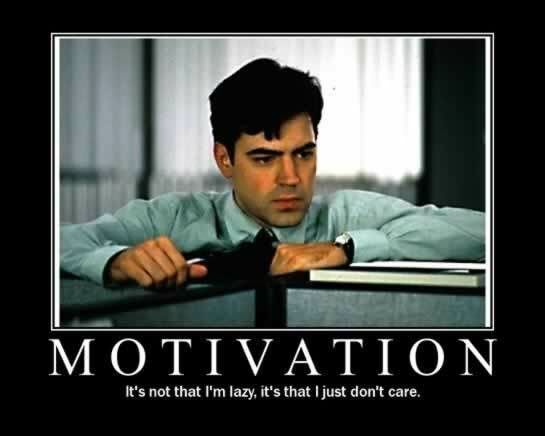 But, back to the point of this whole discussion, which was why we feel superior to our neighbours. According to Marx, if we are alienated from that thing which makes us human, then we are alienated from ourselves, our nature. If we are alienated from our selves then we are also alienated from our fellow humans, for the same reason.
Capitalism creates a situation where all confront all as alien, hostile beings. And this, of course, isn’t simply some abstract mental state, it has a real concrete manifestation through generalized competition. We fight over jobs. We fight to retain control of as many of our scarce financial resources as possible. The carpenter who we hire to fix our house faces us as a man who wants to get the most out of us that he can. We, on the other hand, want to pay the lowest possible price; we want to get the most out of him. And this general dynamic applies whether it is craftsman/businessman vs client or customer vs massive corporation. And, of course, it is so when, as workers, we confront our boss. The same dynamic prevails.
This historically specific – not natural – state of conflict and competition for (artificially) scarce resources becomes generalized throughout society as a state of perpetual antagonism. We feel like someone is always trying to rip us off (and they quite likely are, that’s the nature of scarcity). It causes us to feel not only defensive but also morally superior.
This is one of the key reasons why, for Marx, superceding capitalism is not something that can be announced or dictated from above. Workers, to overthrow capitalism or win a strike even, have to band together. They have to fuse their interest and recognize a common aim. In doing so they begin to overcome that dynamic that puts us at odds with one another. We must fight racism, sexism and homophobia, which increase competition between workers and leave all in a weaker, material, political and moral state. This growing class unity increasingly divides society into those camps that represent the fundamental division – humanity from their species-being, from control of their creative labour. The fact, as the study above demonstrated, that we have less friends now than 20 years ago, and probably feel less connected to our fellow humans, is a measure of how successful neo-liberalism has been in North America in ratcheting up competition between workers. We are working harder for less.
Knowing all this won’t in itself stop us from feeling superior. It’s a material-social problem that can only be solved with a material-social solution. But knowing it will provide us with one more reason to feel superior to all the ignoramuses who are laughing at their fellow workers being humiliated on TV talk shows.
Subscribe to:
Posts
(
Atom
)