A number of articles were sent my way today about the phenomenon in the USA and Scotland - and probably in Canada - of charging parents with child abuse if they "allow" their children to become obese. I've discussed in previous posts here, here and here some of the social and nutritional roots of obesity in North America. But it's worth revisiting some of those points in the context of a discussion of child abuse.
The first thing to keep in mind is that child abuse, like other forms of abuse, is primarily defined in terms that apply to working class people. That is, forms of interpersonal violence that are generally outgrowths of the pressures of poverty, unstable and unhappy job situations, lack of access to extra-curricular resources like sports, community centres, childcare, etc. Of course it's bound up with the oppression of children, just like sexual assault and spousal abuse is tied up with the oppression of women. The people who suffer the most are always the least powerful in any relationship.
But the social response to child abuse or festering problems like obesity are reduced almost exclusively to one of moral panic. Kids are using the internet and are losing the ability to think or focus. Teen sex is the source of teen pregnancy (of course it is in a direct sort of way but not in an inevitable way). Obesity is the fault of neglectful parents who feed their kids badly.
I'm reminded of a news magazine special that I saw in university about a teenager who lived in a small town who made a suicide pact with his friend and then shot himself in the face with a shotgun. The one boy survived, though he was terribly deformed and damaged, forced to take pain killers for the rest of his life, eat through a tube, etc. He and his parents tried to sue a heavy metal band for playing violent devil music that tempted him.
Now, the filmmakers were clearly liberals and rightly made the point that it is absurd to suggest that listening to Iron Maiden would cause a teenager to commit suicide. But what they did instead was to put the focus on the parents. They were poor and the father had had a gambling problem. There was some suggestion of drinking and that their fundamentalist Christianity was hypocritical. It struck me at the time that they had wholly missed the point. This kid - who attempted suicide another time and succeeded - was a white trash trailer kid with no future, living in semi-rural America. The poverty and violence that went hand in hand with his family was his own future. He tried suicide when he was a heavy metal fan and he tried suicide when he was a born again Christian. Neither metal nor Christianity were the problem, nor his parents - it was the system.
Of course I don't mean to suggest that we have no personal responsibility. Rather, the parameters of our choices are seriously constrained and we are faced with the double burden of lacking the resources to be good parents and then suffering guilt - and imprisonment or the loss of custody - when we react in understandably human ways with anger, frustration, or exhaustion-induced neglect.
The same thing applies with obesity, except that there is the added burden that our whole notion of what constitutes nutrition is upside down and makes the problem worse. We are told that a healthy diet is one that is packed with whole grains, low fat and a moderate amount of protein. That - relatively recent - idea of a "healthy diet" is not disconnected from the fact that grains are the cheapest form of high energy density food that we have. And its prioritization as the go-to energy source, along with the demonization of meats and saturated fat, is in my mind a side effect of the end of the post-war boom in the 1970s and a shift towards austerity. We have literally made a virtue of a necessity.
Working class incomes stagnated and then declined, particularly in the USA, where a sustained war on union organization drove union density from about 1/3 of the workforce to less than 12% today - much lower in the private sector. In some regions of the US (and Alberta) unions are effectively non-existent. As living standards have fallen people look to cheaper food sources. Falling living standards are also expressed in longer working hours - American workers work over a month longer now than they did in the 1970s. This makes it more difficult to have a home cooked meal as workers turn to fast foods. As I've discussed recently, fast foods are not only loaded with carb heavy grains - rice, corn, wheat - they are also stuffed with flavour enhancers (generally various forms of sugar) and fillers like wood aka cellulose.
As I was walking down the street the other day I saw a sign for a sale on basmati rice at my local Bangladeshi dry goods store - 40lbs of rice for $30. At less than $1 per pound, that looks awfully attractive to someone on a tight budget compared to $4 or more per pound for pork chops and up to $11 per pound for New York striploin steaks. Ah, but don't worry, those high priced foods are bad for you, all those saturated fats and stuff. And too much protein, that's bad for your kidneys. The cheap shit, that's what you want to be eating. By that logic, food must be the only product under capitalism that gets better when it's cheaper.
The trouble with rice, corn and wheat is that they work too well. Your body absorbs and breaks down the carbs in these grains very quickly. The starches in them become sugar and enter the bloodstream for processing. But anything more than a very small amount of sugar - about 1 teaspoon in your total blood volume - is poison. As any diabetic can tell you, it will kill you if it isn't eliminated very quickly. Your body deals with it by producing a spike in insulin to distribute the sugar where it's needed in the body. But unless you're burning calories very quickly doing some very heavy cardio right after you eat, your muscles simply can't use up that much sugar. And so that cheap rice or that loaf of bread is shuttled to the other disposal facility in the body - your adipose tissue. It becomes fat.
This is different from if you consume protein or fat in excess of what your body needs. Protein is processed by your kidneys and you urinate it out. Or it is processed by your liver - using the metabolization of fat as the fuel source to power this process, and the protein is turned into the small amount of sugar that your body needs, primarily for your brain. The by-product of fat metabolism, on the other hand, is ketones which most of your tissue quite happily takes up in place of sugar. Heart muscle, for instance, works more efficiently using ketones for fuel. Even much of the brain is happy to use ketones. There is one type of cell that can't use ketones and which absolutely needs sugar to survive - cancer cells - but that's another story.
The overall point here is that sugar in both is simple and complex forms leads to obesity. There are other problems with grains as well - phyto toxins that cause auto-immune responses, leaky gut, etc. But for the purpose of our argument, the main issue here is the rise in childhood obesity and poor diet, the root of which is that a good diet is out of reach financially for most working people. It is literally four times more expensive to eat a diet that relies primarily on animal protein and fat as an energy source than one that relies upon grains and other carbs.
And it's worth repeating as well that obesity has little or nothing to do with activity level. Exercise does not make you thin. Our bodies are complex and sophisticated machines, nothing in them happens in a direct and linear way. What's more our bodies have evolved to be homeostatic - to maintain a steady state. Our temperature is always the same - unless we're ill. If the environment - severe heat or cold - causes our internal body temperature to move even a few degrees we can suffer brain damage, organ shutdown and death. Our body morphology is no different. If we "overeat" our body knows how to eliminate most excess as waste. It knows not to store too much fat. It wants to maintain a stable body weight and fat percentage. We have to work hard to overcome our bodies natural homeostatic mechanisms, which is why obesity leads to so many problems from inflammation to diabetes to arteriosclerosis.
Obviously physical activity is a good thing - it builds muscle strength, improves respiratory efficiency, increases flexibility, etc. But it has little or nothing to do with weight. It does however work the other way - obesity leads to less activity. Exercise becomes difficult and painful for those suffering from obesity.
What is the solution? The first solution is that the working class needs a big fat raise so that we can afford high quality meats, poultry and fish. Secondly, we need to revise our ideas about nutrition and revamp our system of food production in order to meet the real nutritional needs of the population. Ultimately that means redesigning cities and suburbs (like, get rid of them) to permit the integration of food production and high density residential living - which will also encourage walking, biking, and make public transit efficient and affordable. And it means opposing all attempts to blame working class parents for the obesity suffered by them and their children. It would be a good step, however, to outlaw the poison that is sold as food in the supermarkets - from twinkies to soda pop (5 teaspoons of sugar per can!). Processed food has exploded as a response to long term austerity and it should be abolished along with it.
Observations: Should Morbid Childhood Obesity Be Considered Child Abuse?
Wendy Mesley on CBC: Is Childhood Obesity Abuse
Showing posts with label hunger. Show all posts
Showing posts with label hunger. Show all posts
Thursday, July 28, 2011


Thursday, July 8, 2010
Obesity & The Myth of the Lazy Worker
We all know the mantra from various health organizations both governmental and non-governmental: "eat less, exercise more." That's the solution, we are told, to the "obesity epidemic" that continues to sweep across North America and beyond. The basic idea behind this is that people are overweight because they are lazy gluttons. We see various represenations of this myth on both the right and the left of the political spectrum. "We consume too much," say the environmentalists. "Fat people are lazy," say the right. I have written on this previously but it's worth re-stating, especially in the light of two new studies that I'll discuss in moment.
I was drawn to thinking about this discourse on obesity a couple of days ago while having a conversation with someone regarding the financial meltdown in the US real estate market. The problem, the dominant US discourse runs, is that banks were forced to lend to poor people who got in debt over their heads and then couldn't pay their mortgages. That then reminded me of the arguments faced by the people of Greece to justify imposing a harsh austerity package that will drastically roll back average living standards in that country. The problem, say the commentators, is that the Greeks have had it too easy. Greek workers are lazy and over-compensated with "generous" retirement packages, generous vacation packages, generous social services and education. You get the gist.
There's a pattern here. All the problems of our society are the result of the ignorant masses who just don't understand. If only they/we would allow our social betters to shape and reshape the social order to solve problems without protesting (like some of us did at the G20), then things would all be fine. It's rather convenient since we didn't get to make any of the decisions that got us into these messes in the first place. It wasn't working people who decided after World War Two that the best way to spend government transportation dollars was to build millions of miles of highway infrastructure across the USA and Canada rather than investing in public transit. It isn't working people who are fundamentally driving urban sprawl and big box malls - it is developers trying to maximize profits. Yet "overconsumptionist" arguments suggest that it is the greedy aspiration of working people - to own new lawn mowers, new whipper-snippers and new big screen TVs - that is driving global warming and sweatshops in the third world.
How does this relate back to obesity and food? Back in the early 1970s a committee was formed, the United States Select Committee On Nutrition and Human Needs, chaired by future presidential hopeful George McGovern. It began by focusing on hunger but then in 1974 expanded its mandate to look over "over-eating." One of the legacies of this committee was the strongly enhanced notion of a link between high fat diets, obesity and sedentary lifestyles. It led to the creation of the food pyramid, which placed carbohydrates - whole grains - at the bottom. In other words carbs were the energy foundation of a healthy diet. Most of the major conclusions - eat less, exercise more - are still the foundation of the food pyramid. This outcome was controversial and its effects can be measured, as noted by Lierre Keith in her book The Vegetarian Myth. This is from a quote in a review on the blog of Dr. Eades.
In some ways the degradation of food in the post-Keynesian era is a stellar example of a more general process by which the inexorable decline was hidden. Cheap goods produced in even lower wage districts - China & the rest of Asia, Mexican maquilladoras, etc - helped cover up for the fact that things weren't getting better year after year as they had done for 20-years prior to the oil slump. And cheap food, heavily salted, filled with trans fats and loaded with sugar, covered up for the fact that where once Americans ate quality food (at least most Americans), they now were filling up on garbage. I have discussed this more than once elsewhere.
It has been suggested that living in the suburbs and leading a sedentary life because of our dependence upon cars is making us fat. I would argue that this lifestyle is making us soft; reducing muscle tone, flexibility, etc. But that's not the reason we're accumulating adipose tissue at such high rates. This argument comes in many ways from a book by Gary Taubes entitled Good Calories, Bad Calories, which challenges the dominant view of the role of macronutrients. Check out my review and then get yourself a copy. His basic argument is that the body operates on the basis homeostasis (ie. a stable state - for instance, we keep our body temperature around 37.5 degrees Celsius, regardless of the external temperature) and that this principle negates the idea that exercise would reduce fat on the principle of a simplified version of the Second Law of Thermodynamics. The basic application of this law in the area of obesity is as follows: calories in - calories out = weight gain/loss. Therefore, if you increase the number of calories you burn, you ought to lose weight. Except that the body is a complex machine and when you begin to work out one of the first things you notice is an increase in hunger. Your body needs more fuel. Now, you can deny yourself but the likelihood that you can go through your life feeling hunger as some sort of viable lifestyle - unless it's imposed by poverty or circumstance - is absurd. It's also extremely unhealthy to deny your body the nutrients that it needs. It's telling you you're hungry for a reason. Now, numerous dieticians for the past 75 years (at least) have been saying that exercise doesn't reduce body mass but it still sticks in the popular consciousness. Now along come these two studies. The first is from Indiana University and it says basically that exercise doesn't reduce weight, except in white women.
The second study from the Peninsula Medical School in Plymouth, UK followed a cohort of school children for 11-years and found that there was no relationship between level of physical activity and obesity. What they concluded was much more interesting (and in line with Taube's argument) and takes that Second Law of Thermodynamics and puts it on its head.
Ever notice how that high carb dinner seemed to be just a distant memory within an hour, while that big steak just sits in your belly for hours? It's not an illusion. Excess sugar is dangerous for your body and carbs - especially refined carbs like white flour, white rice, sugar, white potatoes, etc. - are rapidly absorbed and broken down into sugar. Your body spikes your insulin levels in order to clear all that sugar energy from your body, converting it into fat tissue. So, while you add fat you don't actually feed your body, leading to the apparent irony that the obese are hungry all the time because their cells are literally starving. All of which is why it's more correct to say that obesity in America is just another face of hunger, disguised by garbage. Americans aren't over-eating, they're starving to death, it's just that this form of starvation doesn't lead to kwashiorkor it leads to diabetes, heart attack, stroke, dementia and obesity.
I was drawn to thinking about this discourse on obesity a couple of days ago while having a conversation with someone regarding the financial meltdown in the US real estate market. The problem, the dominant US discourse runs, is that banks were forced to lend to poor people who got in debt over their heads and then couldn't pay their mortgages. That then reminded me of the arguments faced by the people of Greece to justify imposing a harsh austerity package that will drastically roll back average living standards in that country. The problem, say the commentators, is that the Greeks have had it too easy. Greek workers are lazy and over-compensated with "generous" retirement packages, generous vacation packages, generous social services and education. You get the gist.
There's a pattern here. All the problems of our society are the result of the ignorant masses who just don't understand. If only they/we would allow our social betters to shape and reshape the social order to solve problems without protesting (like some of us did at the G20), then things would all be fine. It's rather convenient since we didn't get to make any of the decisions that got us into these messes in the first place. It wasn't working people who decided after World War Two that the best way to spend government transportation dollars was to build millions of miles of highway infrastructure across the USA and Canada rather than investing in public transit. It isn't working people who are fundamentally driving urban sprawl and big box malls - it is developers trying to maximize profits. Yet "overconsumptionist" arguments suggest that it is the greedy aspiration of working people - to own new lawn mowers, new whipper-snippers and new big screen TVs - that is driving global warming and sweatshops in the third world.
How does this relate back to obesity and food? Back in the early 1970s a committee was formed, the United States Select Committee On Nutrition and Human Needs, chaired by future presidential hopeful George McGovern. It began by focusing on hunger but then in 1974 expanded its mandate to look over "over-eating." One of the legacies of this committee was the strongly enhanced notion of a link between high fat diets, obesity and sedentary lifestyles. It led to the creation of the food pyramid, which placed carbohydrates - whole grains - at the bottom. In other words carbs were the energy foundation of a healthy diet. Most of the major conclusions - eat less, exercise more - are still the foundation of the food pyramid. This outcome was controversial and its effects can be measured, as noted by Lierre Keith in her book The Vegetarian Myth. This is from a quote in a review on the blog of Dr. Eades.
And some scientists knew ahead of time that they would be. Phil Handler, the president of hte National Academy of Scientists asked Congress, “What right has the federal government to propose that the American people conduct a vast nutritional experiment, with themselves as subjects, on the strength of so very little evidence that it will do them any good?” Dr. Pete Ahrens, an expert on cholesterol metabolism, told the McGovern committee that the effects of a low-fat diet weren’t a scientific matter but “a betting matter.”
It’s twenty-five years later and we aren’t winning this bet. Each US American now eats sixty pounds more grain per annum and thirty pounds more cheap sugars, mostly from corn. [Is it any wonder we're all fat?]Now, I think this might well overstate the power of the policy shift in terms of dietary recommendation. What is more interesting is that this Select Committee, from its founding to its closure and conversion into the Dietary Guidelines for Americans, spanned the period from the end of Keynesian liberalism in American into the austerity and beginning of the multi-generational rollback of living standards that we are still in the grip of. I believe that the shift from focusing on hunger in America to focusing on over-eating in America reflected a more general ideological and economic shift in society. As such, these dietary recommendation really presage what was tending to happen anyway - though it certainly reinforced and justified that trend. Basically, as American living standards stagnated and declined from their 1973 peak there was a growing reliance upon empty, cheap calories. The growth of the two income household as a necessity to sustain the post-war lifestyle, necessitated the growth in fast food and processed food products. And the general sense of a squeeze on the pocketbook drew Americans towards purchasing cheaper but still tasty foods.
In some ways the degradation of food in the post-Keynesian era is a stellar example of a more general process by which the inexorable decline was hidden. Cheap goods produced in even lower wage districts - China & the rest of Asia, Mexican maquilladoras, etc - helped cover up for the fact that things weren't getting better year after year as they had done for 20-years prior to the oil slump. And cheap food, heavily salted, filled with trans fats and loaded with sugar, covered up for the fact that where once Americans ate quality food (at least most Americans), they now were filling up on garbage. I have discussed this more than once elsewhere.
It has been suggested that living in the suburbs and leading a sedentary life because of our dependence upon cars is making us fat. I would argue that this lifestyle is making us soft; reducing muscle tone, flexibility, etc. But that's not the reason we're accumulating adipose tissue at such high rates. This argument comes in many ways from a book by Gary Taubes entitled Good Calories, Bad Calories, which challenges the dominant view of the role of macronutrients. Check out my review and then get yourself a copy. His basic argument is that the body operates on the basis homeostasis (ie. a stable state - for instance, we keep our body temperature around 37.5 degrees Celsius, regardless of the external temperature) and that this principle negates the idea that exercise would reduce fat on the principle of a simplified version of the Second Law of Thermodynamics. The basic application of this law in the area of obesity is as follows: calories in - calories out = weight gain/loss. Therefore, if you increase the number of calories you burn, you ought to lose weight. Except that the body is a complex machine and when you begin to work out one of the first things you notice is an increase in hunger. Your body needs more fuel. Now, you can deny yourself but the likelihood that you can go through your life feeling hunger as some sort of viable lifestyle - unless it's imposed by poverty or circumstance - is absurd. It's also extremely unhealthy to deny your body the nutrients that it needs. It's telling you you're hungry for a reason. Now, numerous dieticians for the past 75 years (at least) have been saying that exercise doesn't reduce body mass but it still sticks in the popular consciousness. Now along come these two studies. The first is from Indiana University and it says basically that exercise doesn't reduce weight, except in white women.
"It may seem intuitive that greater amounts of exercise lead to less obesity, but an Indiana University study has found that this conventional wisdom applies primarily to white women."Now, my guess is that white women aren't from another planet and so there's a good chance that there's something else going on that is an independent variable causing white women who exercise to lose weight - compared to say African-American women. My guess is that white women are of a generally higher income status in the US and are thus more likely to eat more whole foods, be more likely to stay at home and thus prepare their own meals, etc. The study generates an absurd assumption that adding exercise at work would solve the problem without any evidence.
The second study from the Peninsula Medical School in Plymouth, UK followed a cohort of school children for 11-years and found that there was no relationship between level of physical activity and obesity. What they concluded was much more interesting (and in line with Taube's argument) and takes that Second Law of Thermodynamics and puts it on its head.
"Physical activity had no impact on weight change, but weight clearly led to less activity."In other words, as these kids became overweight, physical activity became increasingly difficult and was thus reduced. Taube's takes the same approach to obesity and food, basing it on some well established science, arguing that people aren't fat because they eat too much, rather they eat too much because they're fat. Or, to clarify the point - eating a high carb diet causes the body to produce an excess of insulin and rapidly store the consumed food energy as fat tissue, leaving the body hungry for food energy.
Ever notice how that high carb dinner seemed to be just a distant memory within an hour, while that big steak just sits in your belly for hours? It's not an illusion. Excess sugar is dangerous for your body and carbs - especially refined carbs like white flour, white rice, sugar, white potatoes, etc. - are rapidly absorbed and broken down into sugar. Your body spikes your insulin levels in order to clear all that sugar energy from your body, converting it into fat tissue. So, while you add fat you don't actually feed your body, leading to the apparent irony that the obese are hungry all the time because their cells are literally starving. All of which is why it's more correct to say that obesity in America is just another face of hunger, disguised by garbage. Americans aren't over-eating, they're starving to death, it's just that this form of starvation doesn't lead to kwashiorkor it leads to diabetes, heart attack, stroke, dementia and obesity.
Tuesday, October 20, 2009
Obesity, Hunger & Capitalism

I still hold to that basic view buts it's been strengthened and given a scientific grounding by an incredible book that I just finished reading called "Good Calories Bad Calories" by Gary Taubes. Taubes is a long time, award-winning science journalist with a special interest in health related science. In an interview in 2008, he describes how he ended up writing the book that ended up taking him five years of research:
"I was doing this story for Science on salt and blood pressure, looking into the controversy about whether salt consumption plays any role at all in raising blood pressure and causing hypertension. One of the prime players in this salt/blood pressure controversy was obviously one of the worst scientists I’d ever met... While I’m on the phone with this guy, interviewing him, he takes credit for getting Americans to eat less fat and fewer eggs. I literally finished the interview, called my editor at Science, and I said 'You know, one of the worst scientists I’ve ever interviewed just took credit for getting Americans to eat less fat and fewer eggs, and I don’t know what the story is, but when I’m done with this salt story, I’m going to look into fat, cholesterol, and saturated fat.'"And five years and 450 pages later, he has written an unbelievably comprehensive look at the science of diet and nutrition as it has been promoted for the past generation. In particular, he explodes the common-sense idea that eating fat causes health problems and, in particular, obesity.
His general argument is that diseases like obesity, diabetes, atherosclerosis, heart disease, stroke, and certain types of cancer, are the result of the rapid and astounding rise in the quantity of refined carbohydrates that we consume. He argument covers a lot of bases - looking at metabolic science over the past 150 years, diet science over the same period, ethnographic studies of diet, etc. He examines studies of numerous pre-modern civilizations that didn't rely heavily on carbohydrates for their energy. The people of Tokelau (an island administered by New Zealand), for instance, had a diet that was composed of 75 percent fat, 50 percent of it saturated fat from coconuts, and yet obesity, diabetes and heart disease were unheard of until the arrival of sugar and flour.
His argument for obesity is basically that we have been looking the wrong way at the usual argument that calories in equals calories out. Dieticians and nutritionists have held that if you eat more calories than you burn, you will put on weight because of the first law of thermodynamics, which is unbreakable. Taubes disagrees with that argument for a very simple reason:
"...if you have an obese mother and a malnourished child living in the same family, and this is a common phenomenon, that should be perceived as a refutation of the calories in/calories out hypothesis."The body, evolved over millions of years, is inclined towards homeostasis. It wants to stay the same. It keeps our temperature the same. It resists losing or putting on weight by adjusting metabolism and hunger - for instance when starved, people become lethargic as the body seeks to conserve energy, when we exercise we hunger for larger, more frequent meals. That's why dieting and exercise rarely work for people who are trying to lose weight - the body adjusts automatically. That's also why, even though there has been an "exercise explosion" levels of obesity continue to rise. Obesity isn't a psychological problem or the problem of a weak will - it is the wisdom of the body trying to ensure it gets enough to provide energy to the cells, organs and tissues. As Taubes notes in the same interview:
"I don’t believe that you can understand obesity and its associated chronic diseases, without thinking of obesity fundamentally as a disorder of excess fat accumulation and asking this question: what regulates fat accumulation? That’s going to be the thing that tells you what the cause of obesity is."And this is where carbohydrates come in. The body can use three sources of energy - carbohydrates, fat and protein. When we eat carbohyrdates, the body breaks them down into simple sugars and then they are transported, via insulin, to our cells. But insulin has another effect, it suppresses the use of fat stores for energy. We eat carbs, our insulin levels spike and all that blood sugar ends up in our adipose tissue as fat. But because our body is storing most of the energy, rather than burning it, our cells remain underfed. So we hunger for more carbs, creating a cycle that over time leads to the accumulation of fat, and ultimately to metabolic disorder in the form of diabetes, etc.
This is a big shift in thinking on obesity, from seeing eating as the cause of obesity to instead seeing it as a symptom of obesity. The body is smart: you're hungry, you eat. Instead of blaming "fat Americans" for being gluttons, which is fundamentally about blaming the victims, we should be looking at why people are eating diets that cause them to get fat. As Taubes notes in an interview with PBS Frontline:
"Basically, up until about 1980, the obesity rates in this country are 12 to 14 percent. And then somewhere in that period between the late '70s and late '80s, they shoot up to 22-25 percent. That's known as the obesity epidemic, and the idea is: What explains it?"Prior to then it was obvious by simply looking at who were the most obese people - it was the poorest, the people most likely to be working hard, manual labour jobs. And the ones likely to be eating the least amount of calories. But they were also the cheapest calories, which are carbs: flour, sugar and starchy grains or potatoes. Accepting this basic premise leads to the next question: why did the consumption of carbohydrates suddenly rise in the late 70s?
When we look at it from this perspective we begin to get a glimmer as to why obesity rates began climbing at this time: the rise in the standard of living that occurred after the Second World War had stopped. Living standards began to reverse, women were forced to work outside the home (not that I'm opposed to women working - just that healthy home-cooked meals were replaced by carb heavy fast foods.), unions were smashed leading to longer hours and harder work and thus more fast food dinners. And this was exacerbated by an ideology that blamed workers themselves for their growing paunches. People sought to reduce their fat intake, companies reduced fat in yoghurt, milk, etc etc. Fat as a proportion of our diets was falling - from 40 to 35 percent - even as carb consumption, especially that of sugar, was rising. We now eat something like 160 lbs of sugar every year, compared to perhaps 40 lbs at the turn of the twentieth century. The gluttony theory of obesity also serves to hide the fact that our lives are getting worse. "Look at you," we're told. "You've never had it so good. You're so well off that you're fat." But it is a lie, our sweet tooth is masking with obesity the fact that we're hungrier than ever.
Taubes himself doesn't explore the social and political drives behind the obesity epidemic. For that you'll have to look elsewhere. But his examination of the "diseases of civilization" and explosion of the myth of fat as the cause of it is well worth the read. It is a long book and can get quite detailed, particularly some of his discussion of fat metabolism, but you won't regret it. And, good news, it's available in the Toronto Public Library.
Monday, December 31, 2007
N. American Workers Starving To Death
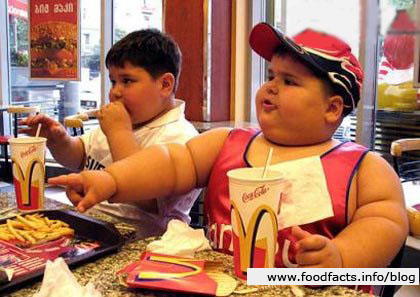 There is much discussion in the first decade of the new century about the “obesity problem”. And there’s no doubt that it is a problem that is growing fast. According to statistics more than a third of Canadians and Americans are overweight or obese. Break this down further and it looks even more grim:
* 58% of men aged 20-34 are overweight in the US 1999-2000
* 67.6% of men aged 35-44 are overweight in the US 1999-2000
* 71.3% of men aged 45-54 are overweight in the US 1999-2000)
* 72.5% of men aged 55-64 are overweight in the US 1999-2000
* 77.2% of men aged 65-74 are overweight in the US 1999-2000
* 66.4% of men aged over 75 are overweight in the US 1999-2000
Overweight prevalence statistics for women in the USA:
* 51.5% of women aged 20-34 are overweight in the US 1999-2000
* 63.6% of women aged 35-44 are overweight in the US 1999-2000
* 64.7% of women aged 45-54 are overweight in the US 1999-2000
* 73.1% of women aged 55-64 are overweight in the US 1999-2000
* 70.1% of women aged 65-74 are overweight in the US 1999-2000
* 59.6% of women aged over 75 are overweight in the US 1999-2000
50% of women aged 20 to 74 are overweight or obese in the US.
These numbers are frankly staggering and there is no doubt that the costs of this epidemic of bad health in human, emotional and financial terms is heavy indeed. It is, in fact, a peculiar example of human unconsciousness that we can normalize this deadly act of self-destruction. Someday, I am convinced, we will look back upon this moment in history and the overweight/obesity problem will be seen as an obscenity and a further condemnation of our death-loving culture.
However, there is a myth that our collective weight problem is one of over-eating; that it is a symptom of our prosperity. We North Americans, so the argument goes, and increasingly the whole planet are gorging ourselves on our wealth. It is another version of the old “humans are greedy by nature” argument that is used as an ideological prop for capitalism. It is also bunk.
The problem of obesity must, in fact, be understood as a nutritional problem rooted in economics. That is, there is a lack of nutritional value in the diet of the average US worker because they cannot afford it – and this has been confirmed by a recent study at the University of Washington.
According to researcher Adam Drewnowski, director of the Center for Public Health nutrition, "The gap between what we say people should eat and what they can afford is becoming unacceptably wide. If grains, sugars and fats are the only affordable foods left, how are we to handle the obesity epidemic?"
Why is this happening? Because it is cheaper and more profitable to feed US workers the 21st century equivalent of saw dust. Processed food is jam-packed with nutritionless, cheap energy: literally, garbage. It is death and people eat it because they work too much and have neither the time, the money, the education nor the energy to prepare or purchase quality, healthful meals.
It is also a feature of the suburbanization of America, which forces everyone to get around via automobile - even to buy a candybar from the store, which is probably 5 kilometres away in a big box mall.
US workers drive to work - where they get no exercise or perform body deforming repetitive exercise - and then they drive home again where they eat the shit that is offered as food. Even the US government admits that the majority of the population are sedentary:
“The majority of persons in the United States do not engage in physical activities consistent with the recommendation of a minimum of 30 minutes of moderate-intensity activity on most days of the week. In 2001, a total of 54.6% of persons were not active enough to meet these recommendations.”
Some put it even higher: "Almost three-quarters of adults aren't active enough physically, according to the federal government's Centers for Disease Control and Prevention."
US workers are increasingly overweight and obese because they are literally starving to death.
Subscribe to:
Posts
(
Atom
)